

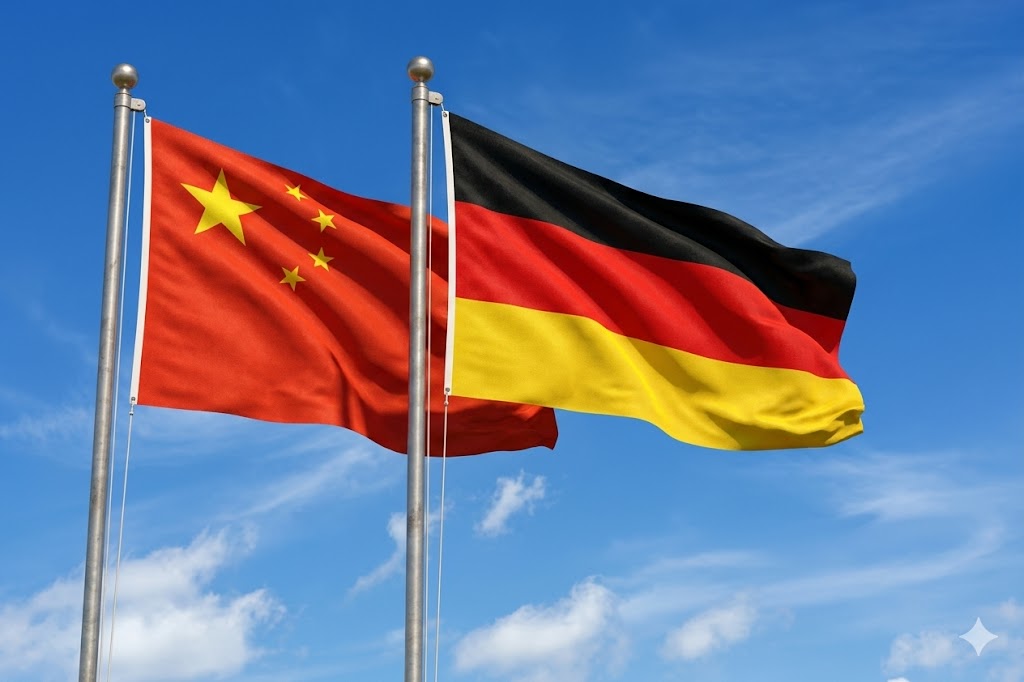
China and Germany are advancing in their cooperative efforts, particularly in business and technology, as innovation and expertise increasingly flow bidirectionally, according to a recent research report presented in Beijing. This marks a shift from the traditional dynamic where technological exchange predominantly moved from Germany to China.
This announcement was made at the China-Germany (China-Europe) Hidden Champions Forum 2026, held in Beijing’s Shunyi district. The event drew over 400 executives and business representatives from across Europe and China, underscoring the growing interest in bilateral collaboration. Insights from the research indicate that a significant number of European companies are keen to expand their footprint in China, with 38 percent of those surveyed planning to boost research and development investment in the country. Additionally, 40 percent of these companies are considering granting more autonomy to their Chinese branches, lessening their reliance on headquarters in Germany.
In a parallel development, Chinese electric vehicle manufacturers like Li Auto and NIO are setting up research and design centers in Germany, highlighting a burgeoning two-way exchange in technological development. This move not only signifies an expansion of Chinese business interests in Europe but also points to a deepening of technological ties between the two nations.
The forum also saw the introduction of a public service station aimed at assisting businesses in overcoming technical trade barriers. Alongside this, a new partnership initiative was launched to encourage German and European companies to engage with Beijing’s economic and technological cooperation zone in Shunyi.
According to Tang Wenhong, Beijing is committed to furthering the collaboration between Chinese and German enterprises. The city aims to attract more innovative companies to solidify its status as a leading international hub for science and technology, thereby benefiting both countries’ economic landscapes.