

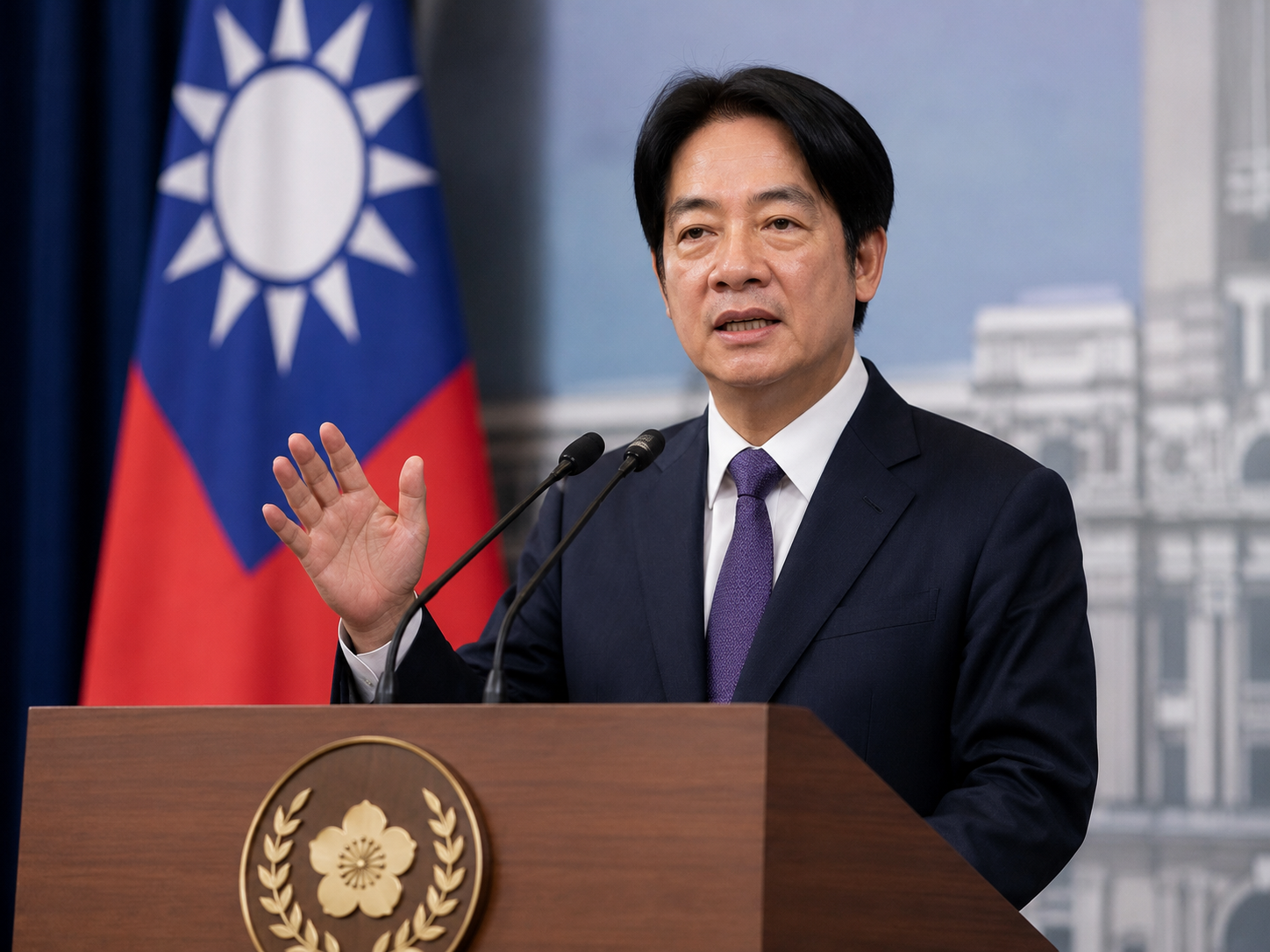
Taiwan’s President William Lai has made a strong rebuke against China’s recent enactment of the Law on Promoting Ethnic Unity and Progress, asserting that Taiwan will not tolerate any “red terror” from Beijing or attempts to extend its influence over the island. During a Democratic Progressive Party Central Executive Committee meeting, Lai described the legislation as an expansion of China’s authoritarian policies with potential global implications. He committed to enhancing Taiwan’s defensive measures to protect its citizens and national interests from Beijing’s increasing political pressure.
The controversial law, which was ratified by China’s National People’s Congress in March and has just come into effect, mandates Chinese citizens to support national unification. It grants authorities the power to hold accountable those deemed to undermine ethnic unity or promote division, though it lacks clear definitions of these offenses. Critics in Taiwan believe the law aims to consolidate the notion that Taiwanese people are part of a larger Chinese national identity.
Lai cautioned that this legislation might be used to rationalize actions beyond China’s borders, consequently heightening pressure on individuals and entities outside the mainland. He highlighted that Beijing has already executed over 110 cross-border actions targeting Taiwan and warned of potential expansions of such measures. The president noted that foreign governments, businesses, lawmakers, civil society organizations, and individuals could become vulnerable to arbitrary enforcement under this broadly defined law.
In response to these challenges, Taiwan is set to bolster its monitoring systems and early warning mechanisms while revisiting policies designed to shield its populace from foreign interference. Lai revealed plans to enhance media literacy, improve civil servant training, and develop robust prevention and response frameworks to combat what he termed as Beijing’s intensifying cross-border repression campaign. Additionally, Taiwan intends to collaborate with democratic allies to amplify international awareness of human rights issues and uphold its sovereignty.
The Ministry of Foreign Affairs in Taiwan shared the president’s apprehensions, labeling the law as another stratagem by Beijing to project its legal reach beyond its territory, contravening international norms and human rights standards. The ministry argued that the statute’s ambiguous language could lead to self-censorship and create uncertainty among those fearing retribution. The legislation has sparked criticism from international entities, including the United States, Japan, the European Union, the United Nations, and Amnesty International, all expressing concerns about its potential impacts on human rights, legal clarity, and freedom of speech.