

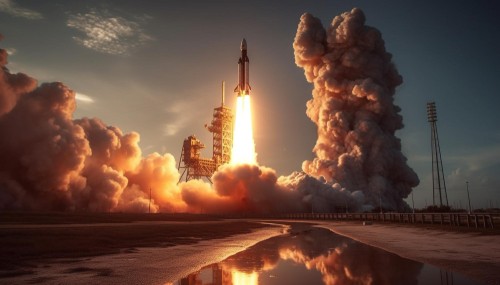
China has achieved a significant leap in its space endeavors with the successful inaugural flight of the Long March 12B carrier rocket. This launch, which took place on Monday, signifies a pivotal enhancement in the nation’s space capabilities. The rocket ascended from the Jiuquan Satellite Launch Center, precisely hitting its intended orbit and deploying the latest installment—the 10th batch—of the Spacesail Constellation communication satellites.
Standing at approximately 72 meters, the Long March 12B is now China’s most formidable single-body rocket. The two-stage launch vehicle is equipped with 10 engines fueled by liquid oxygen and kerosene, producing around 800 metric tons of thrust at liftoff. This power allows it to transport payloads exceeding 20 tons into low-Earth orbit. The development of this rocket began in September 2024, with engineers integrating multiple advanced technologies aimed at boosting its performance and efficiency, such as high-performance propulsion components, lightweight structures, and optimized fuel management systems. Additionally, its autonomous flight-control software is designed to handle in-flight anomalies.
Looking ahead, engineers are focusing on the potential to recover and reuse the rocket’s first-stage booster. Success in this area could lead to a reusable version of the Long March 12B becoming operational in the near future. This ambition aligns with broader industry trends toward sustainability and cost-efficiency in space exploration.
This mission also contributed to the expansion of the Spacesail Constellation, a satellite network in low-Earth orbit aimed at delivering high-speed global broadband internet services. With this latest launch, over 160 satellites have been deployed, part of an ambitious target to launch more than 10,000 satellites by 2030.
The success of this launch marks another milestone for China’s burgeoning commercial space sector and underscores its aspirations to enhance global satellite internet coverage. As China continues to make strides in space technology, these developments reflect its growing influence in the international space community.