

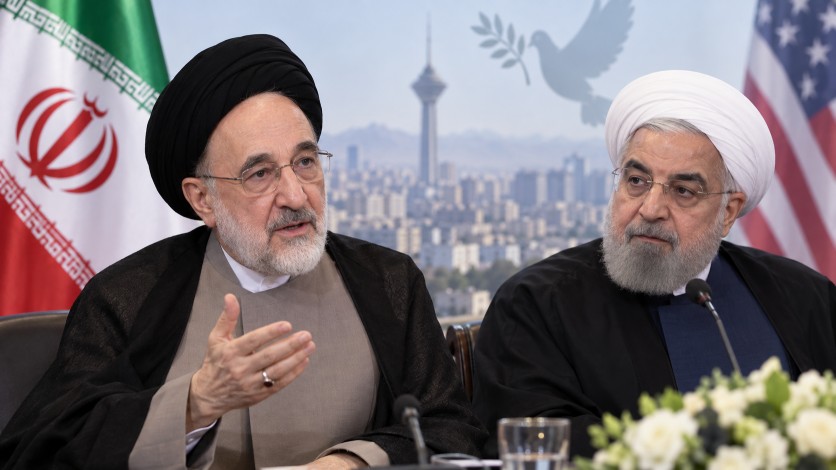
Former Iranian presidents Mohammad Khatami and Hassan Rouhani have made a significant call for ending the conflict with the United States through what they describe as a “dignified” or “honorable” peace. This appeal challenges Iran’s hardline stance and wartime rhetoric. Rouhani has taken this further by suggesting that the Iranian public should have a voice in deciding whether the nation continues on its current path of confrontation with major powers, especially if the general populace does not support such an approach.
Khatami has also cautioned against governing with prolonged wartime emotions and has advocated for diplomacy and negotiations. He emphasizes that Iran’s long-term national interests should take precedence over ongoing confrontational attitudes. However, these remarks have sparked strong reactions from Iranian hardliners. Conservative media have accused the former presidents of promoting surrender, and loyalist rallies have featured chants against any calls for compromise. Furthermore, the editor of the hardline newspaper Kayhan has called for investigations into the actions of the two former leaders.
This debate arises amid increasing economic pressure on Iran. The country faces rising fuel costs and dwindling oil revenues, which add to the strain on its economy. Additionally, tensions around the Strait of Hormuz remain a critical concern for global energy markets. Despite these challenges, Iranian officials have maintained a firm public stance, threatening a more aggressive military posture if diplomacy with Washington does not yield results. This has raised fears that economic pressures might lead to further escalation instead of immediate concessions.
Meanwhile, there are ongoing regional diplomatic efforts. Saudi Arabia and Iran continue to engage in discussions over regional tensions, with senior officials exploring ways to prevent further escalation and promote stability. These efforts underscore a complex landscape where calls for diplomacy coexist with assertions of continued resistance. While former leaders advocate for negotiations and greater public involvement, the current Iranian leadership persists in warning of military escalation if their demands remain unmet.